← All explorations
Designing a Rental Management App for Managers, Owners and Tenants
Overview
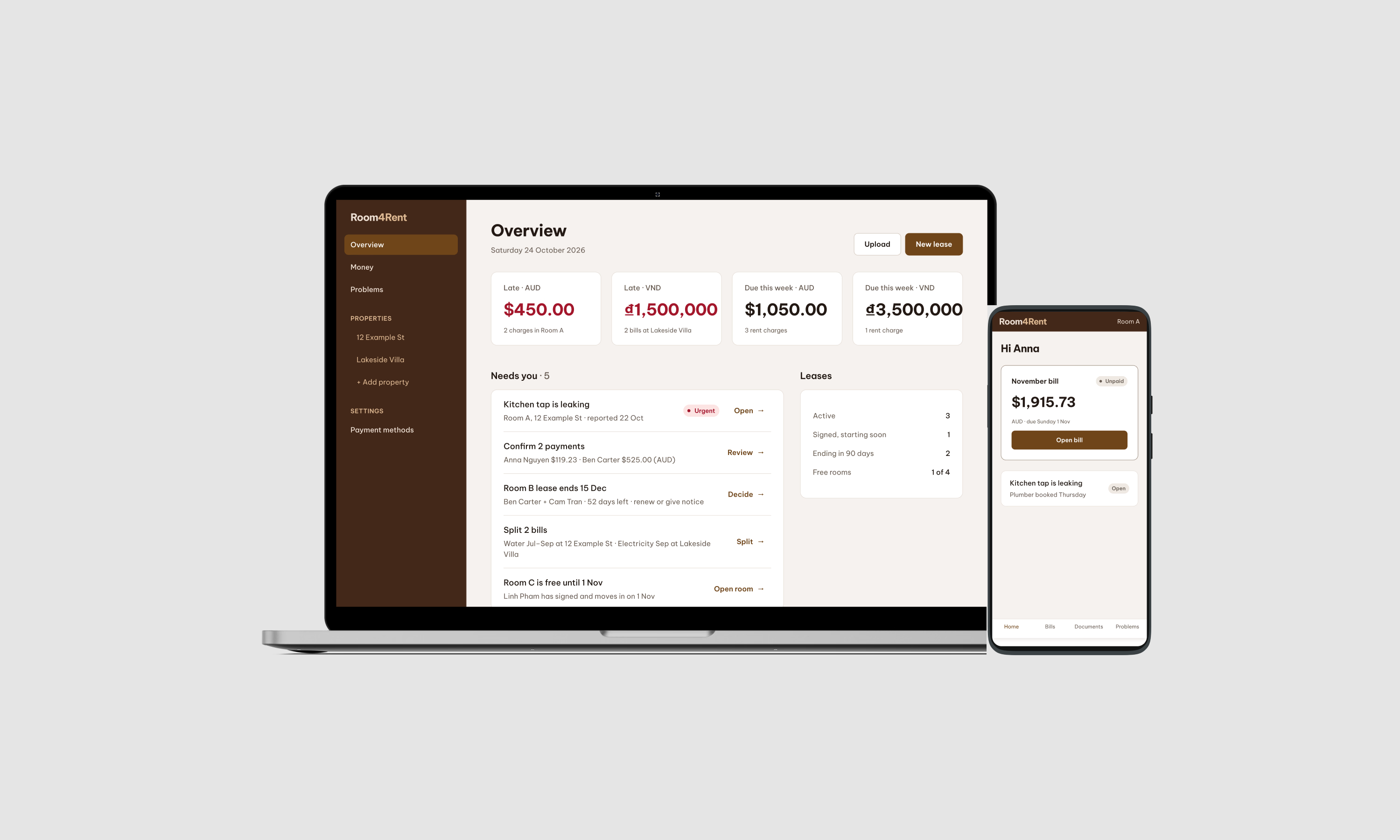
I designed and built Room4Rent, a web app that lets a property manager share documents and money records with property owners and tenants, and I set access by folder (Property > Room > Lease) so each person sees only the files meant for them. Managers and owners use it on desktop and tenants use it on mobile. Monthly bills, utility splits, payments and deposit returns are all stored in the same folders. My goal was an app one person could run every month without checking file permissions by hand.
The primary user is the property manager who runs several properties on behalf of one or more owners. Their primary problem is that each document and money figure has to reach exactly the right audience, owners or one lease's tenants, and a single wrong share exposes private money or personal data.
Research
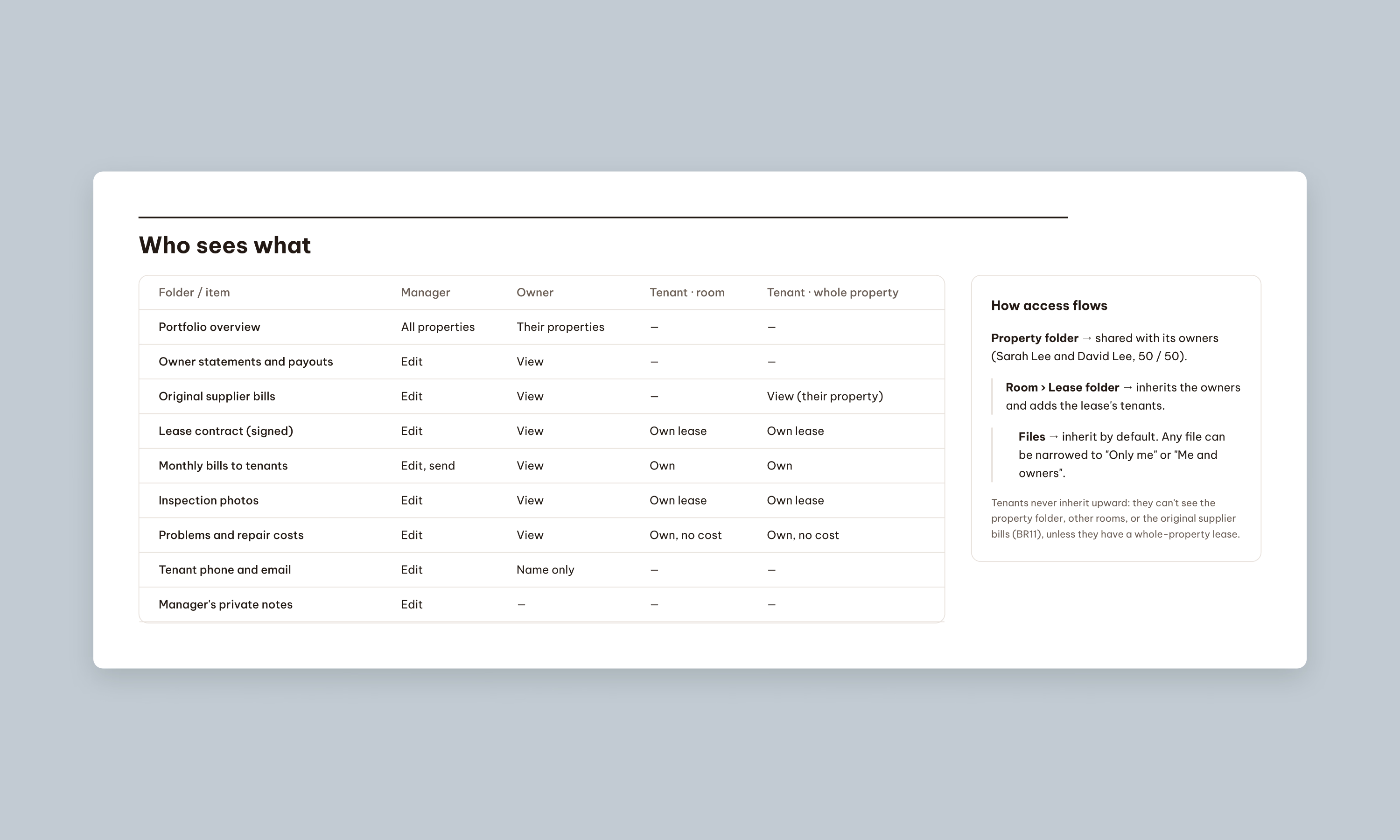
Listing every item a manager handles against the three roles showed that each item already belonged to one property, room or lease, so wrong shares came from setting access file by file instead of by that structure.
Challenges
Tenants in a shared house could see the supplier's full bill and other tenants' shares, which exposed private money data between people who do not know each other. Rent and utility bills arrived at different times, so tenants got several partial payment requests a month, and any change after sending made them unsure which amount to pay. A change to the ownership split or management fee changed every owner's payout, so one person changing it alone put the owners' money at risk. A tenant's "I've paid" message had no proof attached, so the manager could not tell a claim from a real payment. The deposit return at move-out had no shared record, so every deduction led to a dispute in chat messages.
Decisions
Access Is Set by Folder, Not by File
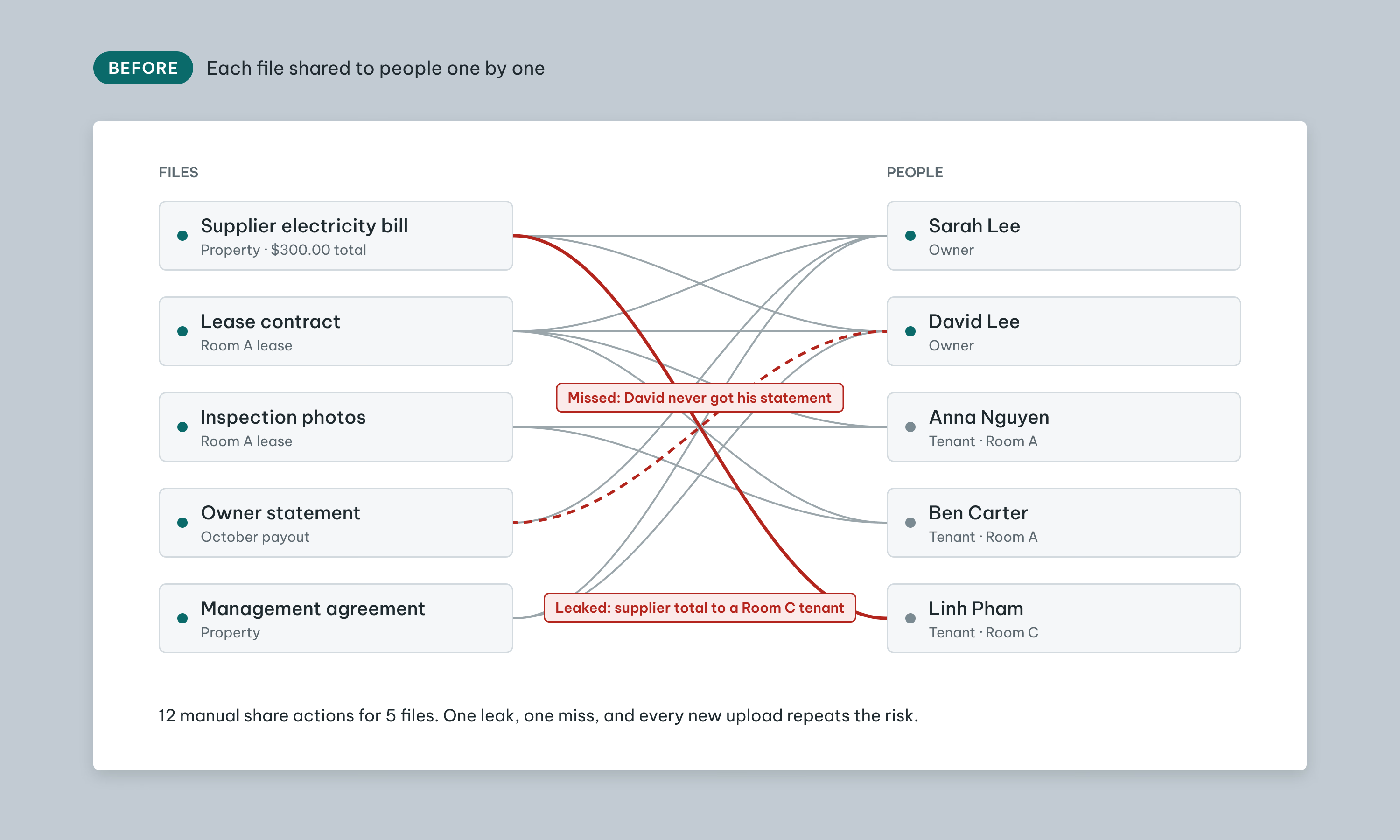
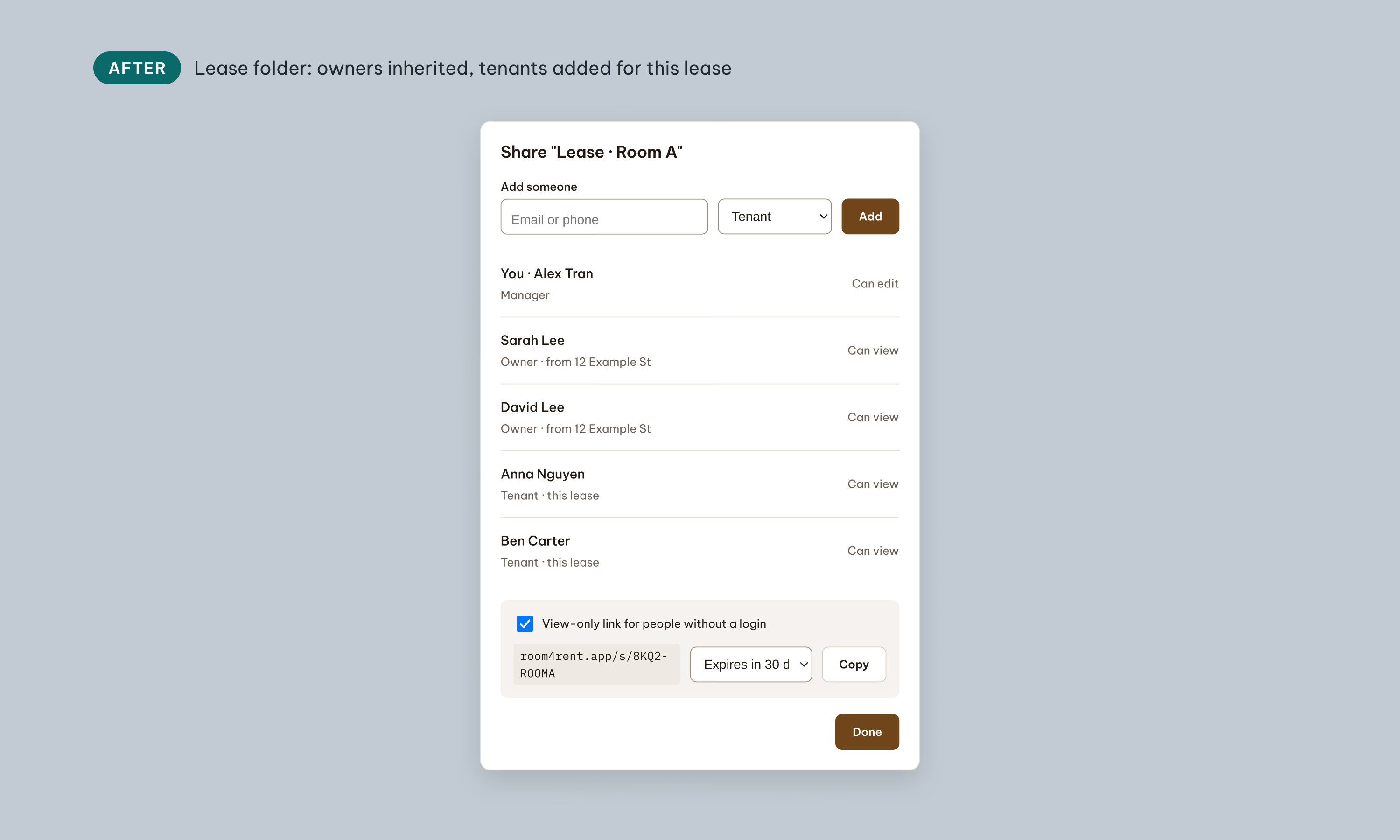
This was an information architecture decision: it fixed the main cause of the primary problem, where a file shared one person at a time could reach the wrong people. I considered a permission list on each file, like a generic data room, but then every new upload was another chance to miss someone or add the wrong person. I chose folders: the property folder is shared with its owners, each lease folder gets the same owners plus that lease's tenants, and a single file can only be limited further to "Me and owners" or "Only me". The trade-off is less flexibility, because a manager cannot give one tenant a single file from the property folder.
Room Tenants See Only Their Own Share
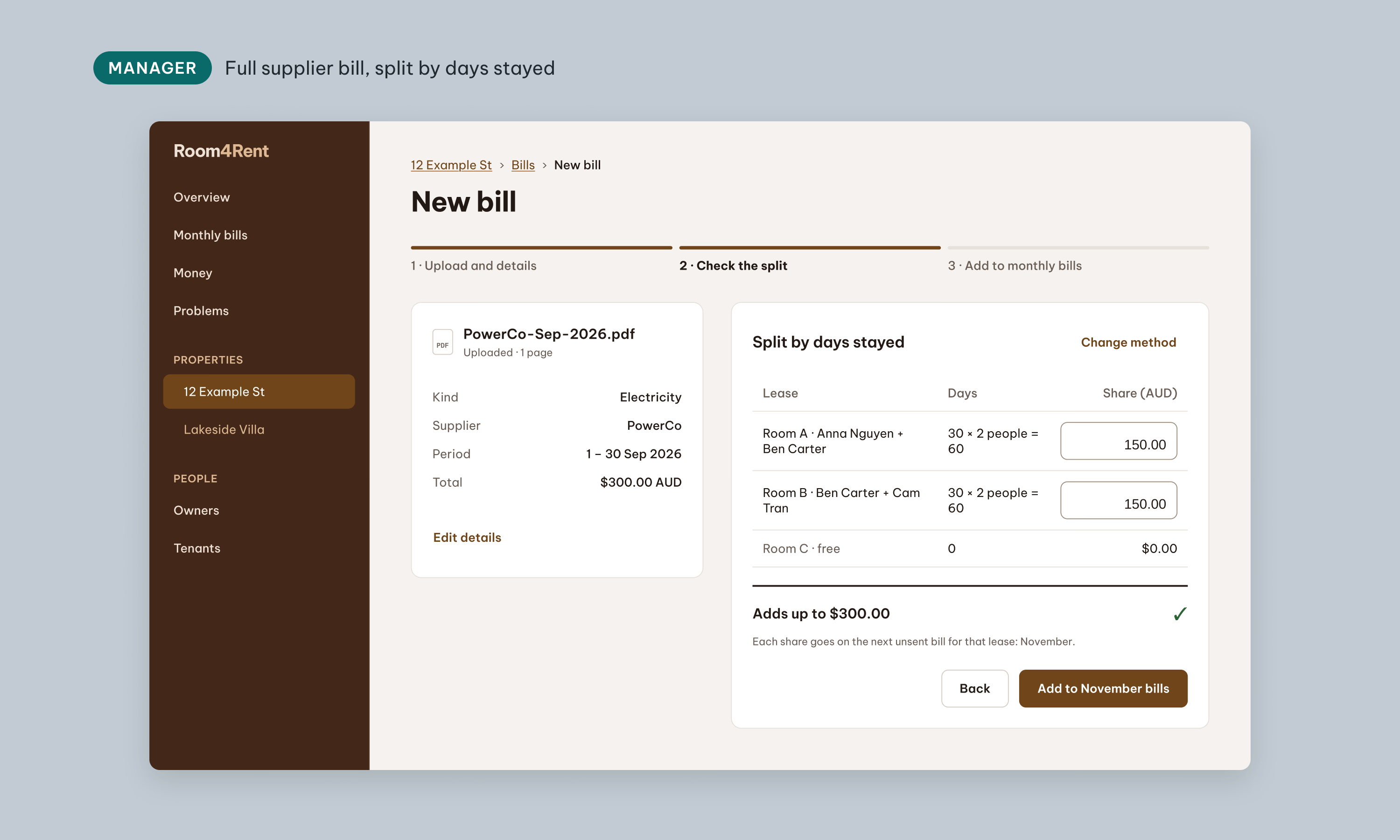
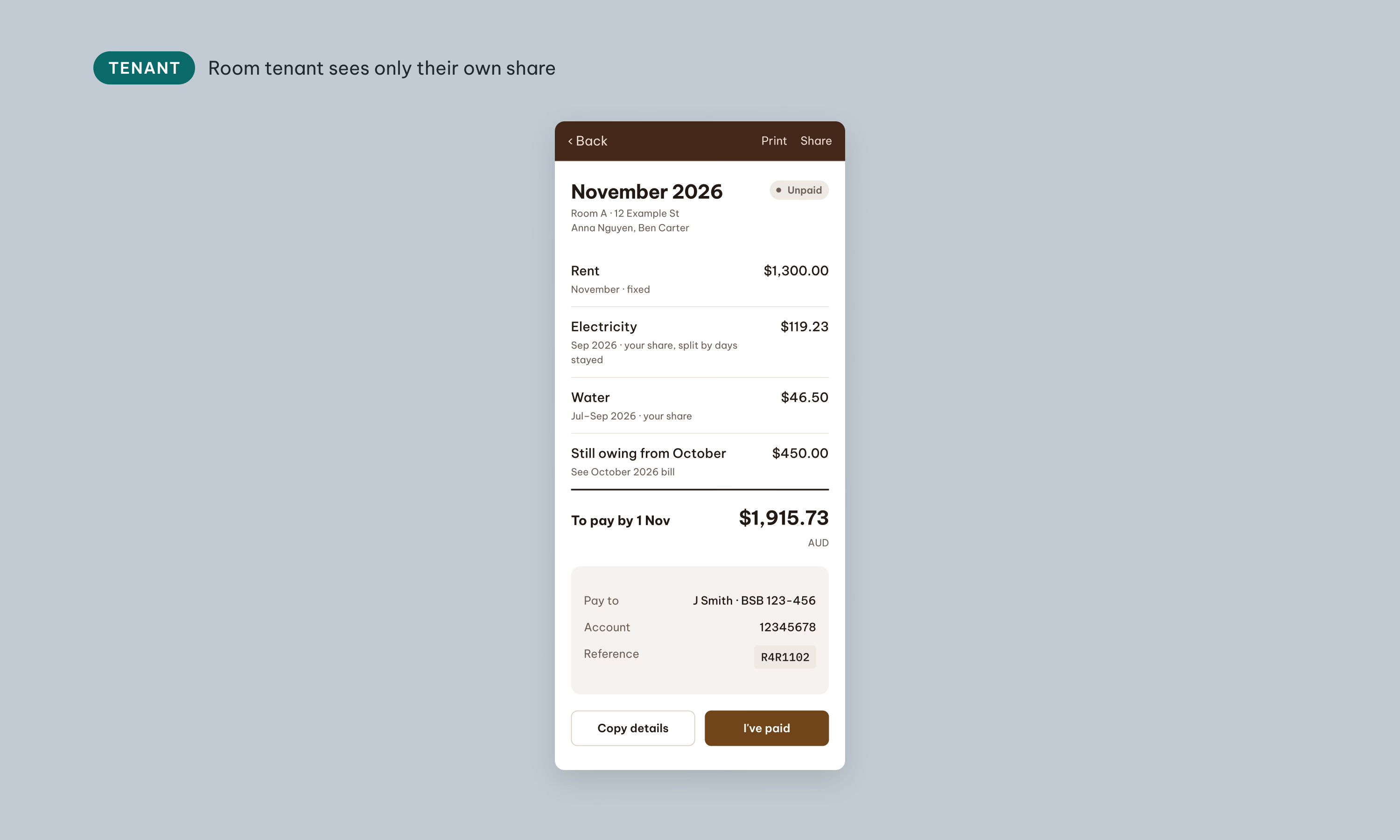
This was a technical trade-off: it fixed the part of the primary problem where a room tenant could see the supplier's total and other tenants' shares. I considered hiding those figures on the tenant screen only, but hidden data is still sent to the page, and one missed check exposes it. I chose to give every lease its own bill rows, so a room tenant's bill never contains another lease's amounts, and the database query never returns property-level files to a tenant. The trade-off is that a whole-property tenant needs a separate rule to see the original supplier bill, which adds one more case to test.
One Bill a Month, Locked Once Sent
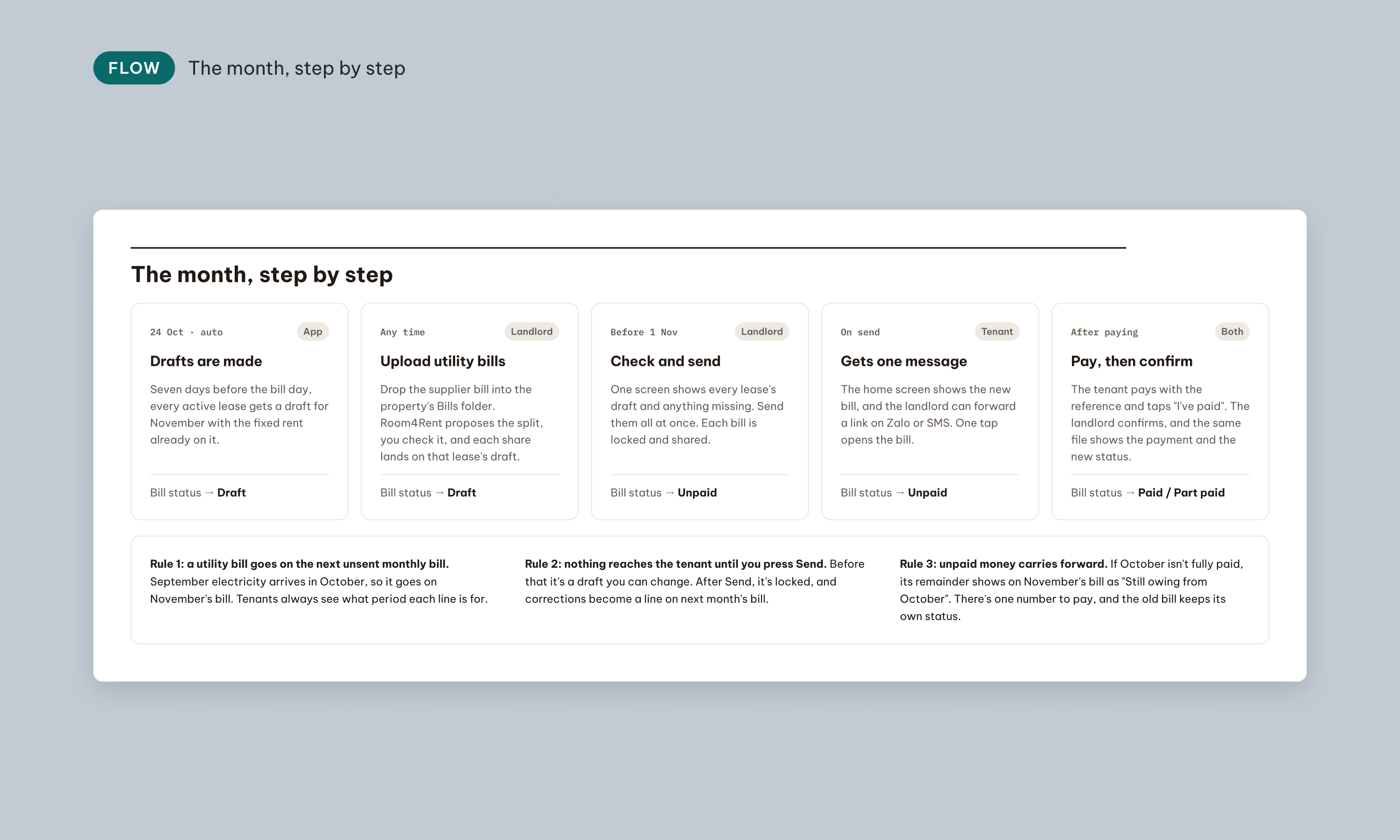
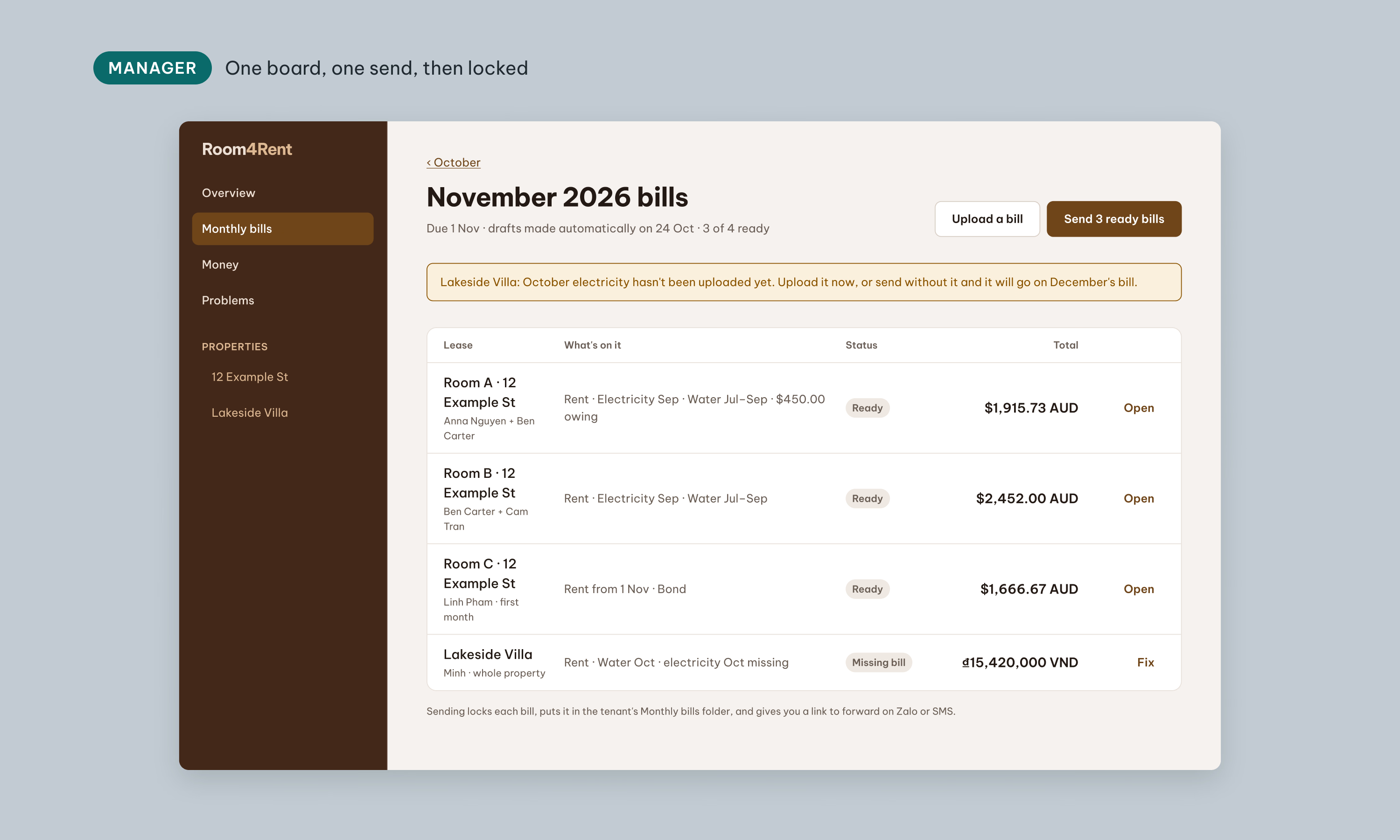
This was a flow decision: it fixed the part of the primary problem where tenants received several partial requests and amounts changed after sending. I considered sending rent and each utility bill as soon as it arrived, but that meant several messages a month and no single amount to pay. I chose one bill per lease per month: the app drafts the rent seven days ahead, adds utility shares as bills arrive, and the manager sends the whole month in one action, after which the bill is locked. The trade-off is that a mistake found after sending goes on next month's bill as a correction, not an edit.
Ownership Changes Need Every Owner's Approval
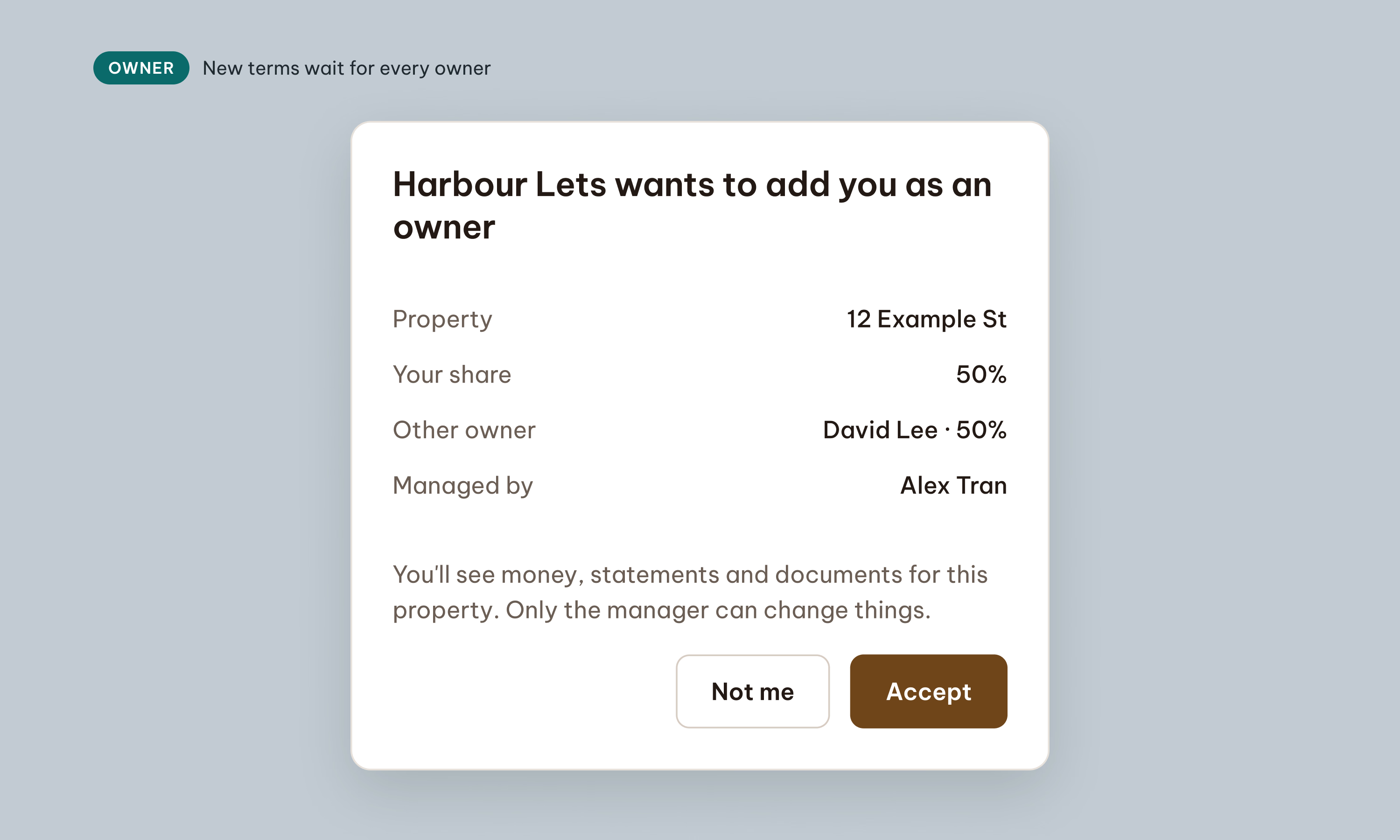
This was a flow decision: it fixed the part of the primary problem where one person could change the ownership split or management fee and change every owner's payout. I chose to keep new terms pending, with no effect on money, until the manager and every named owner approve, because an unapproved change to someone's income is the most expensive mistake the app can make.
"I've Paid" Needs a Receipt
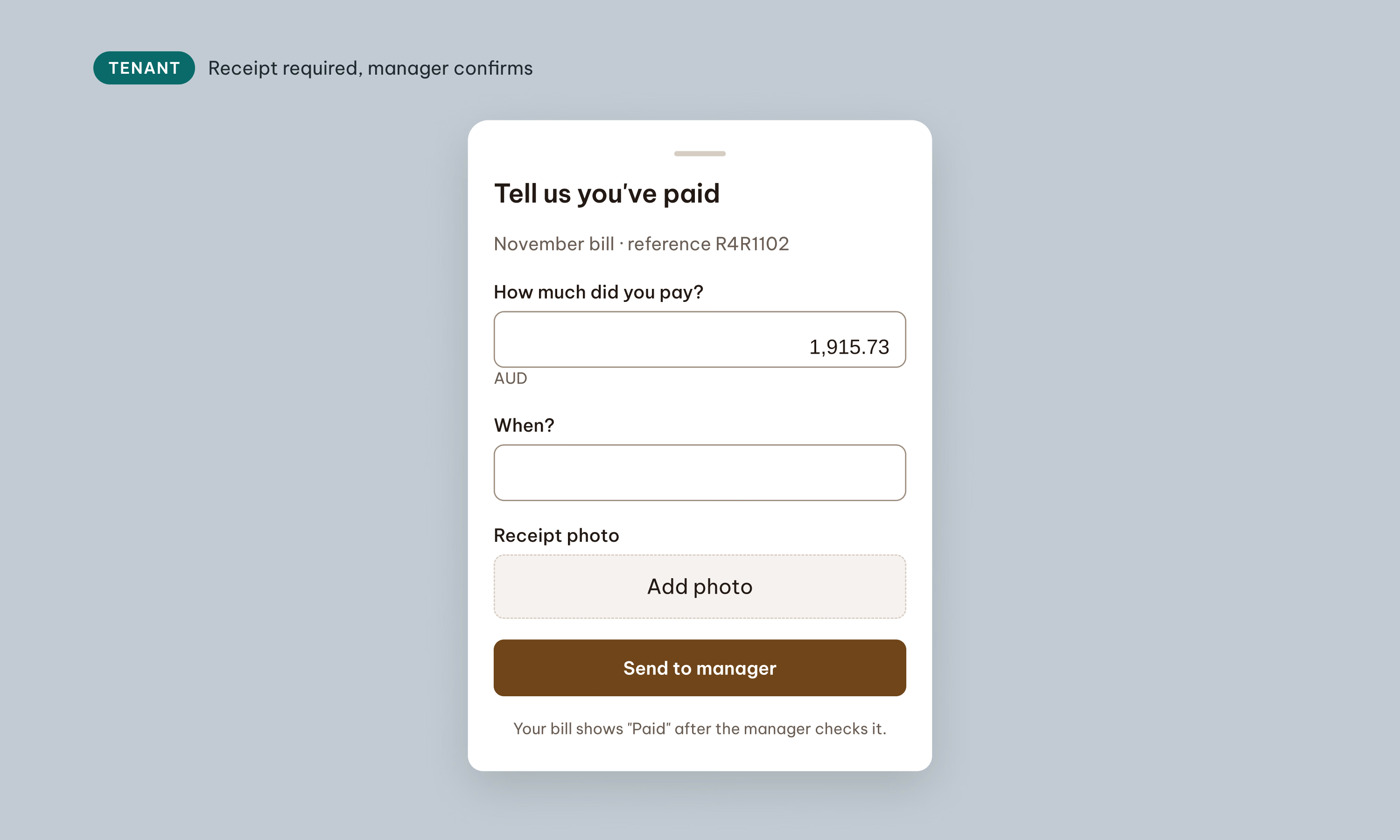
This was a content decision: it fixed the part of the primary problem where a tenant's payment claim could not be told apart from a real payment. I made the receipt mandatory and kept the bill unpaid until the manager confirms it, so a claim never changes a balance by itself.
Deposit Deductions Need Proof
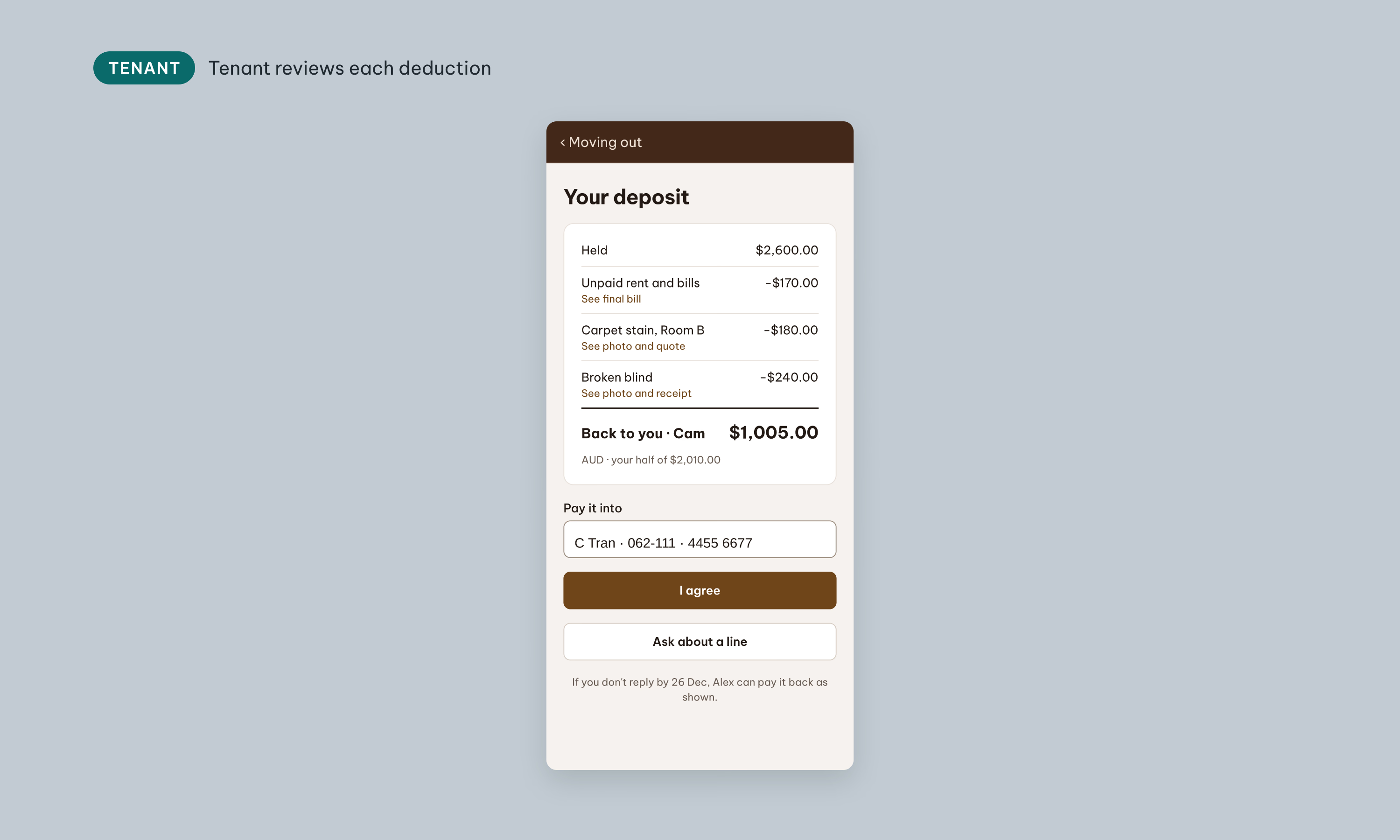
This was a flow decision: it fixed the part of the primary problem where move-out deductions led to disputes in chat messages. Each deduction needs a photo or receipt as proof, the tenant can question a single line, and the lease becomes read-only once the payback is recorded.
Testing
I reviewed every Manager screen live, side by side with the design handoff, and fixed each one before moving on. That review found app-wide bugs a screen-level check missed: the sidebar's property list was empty on almost every page, internal rule codes like "(BR17)" leaked into user-facing text, and a shared Cancel button did nothing.
Reflect
12
build phases shipped live
38
shared UI components
3
roles on one folder model
I shipped all 12 build phases to a live site, and the whole UI uses 38 shared components and one file of design tokens, so changing the brand means editing that one file. Hypothesis: because access is set by folder, a manager can add a lease or upload a file without checking who can see it, but I have not measured this with real managers yet.
Next, I would review the Owner and Tenant screens on the live site one by one, the same way I reviewed the Manager screens, because those were only fixed when a Manager change affected them. I would also test the tenant flow with real tenants on their own phones, because I checked the folder model against the design and the spec, not against real people.
Built in: Room4Rent →